The SCHER/AZAD method
An artistic and contemplative framework rooted in West Asian storytelling and Vipassana Meditation.
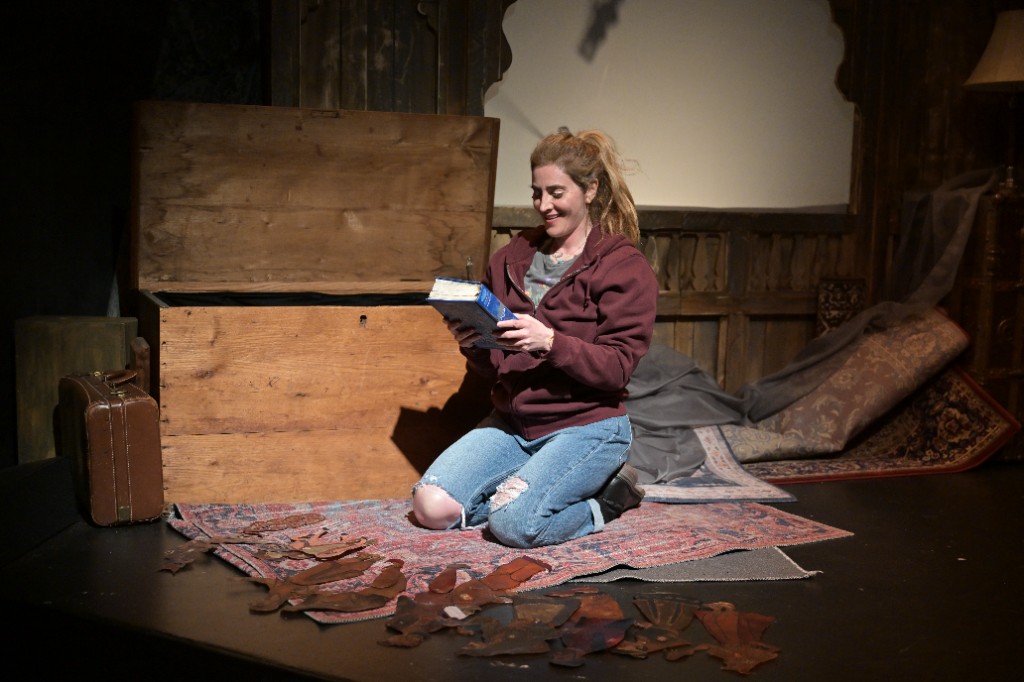
AZAD (the rabbit and the wolf) · potrero stage · april 2025
THE SCHER/AZAD METHOD
A Framework for Perceptual Freedom
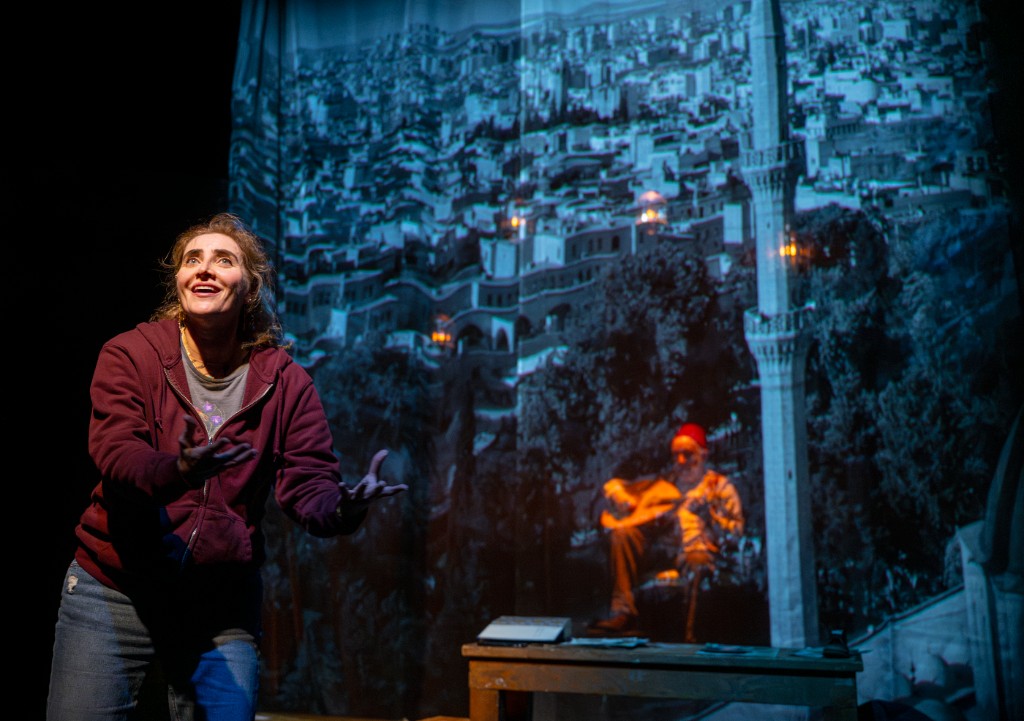
AZAD (the rabbit and the wolf) · potrero stage · april 2025
The Scher/AZAD Method began to take shape in Aleppo in 2019.
After rediscovering the Karagöz shadow puppets in her family’s war-torn attic, Sona broke her foot. Immobilized in her grandmother’s bed, she began reading The Thousand and One Nights and arrived at a new interpretation of its frame story: a map of how trauma takes hold, perpetuates itself, and can be transformed.
King Shahriyar is trapped inside a single story created by betrayal. Scheherazad does not confront that story with another fixed story. Night after night, through stories within stories, shifting points of view, paradox, suspense, contradiction, and humor, she introduces complexity into the reality that has imprisoned him. His perception widens, and the cycle of violence ends.
It was there, lying in her grandmother’s bed, that Sona saw AZAD—“free”—inside the name Scheherazad.
Storytelling is not inherently healing. Stories can also harden identity, justify violence, and keep trauma alive. Trauma narrows perception until one story feels like the only possible reality.
The question became: What kinds of stories allow us to see beyond the reality trauma has constructed?
Sona explored that question through the creation of AZAD (the rabbit and the wolf). Then, after more than a decade of meditation practice, something became clear during a six-week silent Vipassana retreat at Insight Meditation Society in the fall of 2025:
Vipassana and the puppet perform the same perceptual function.
Both create distance between us and the story we are inside.
That distance makes fuller contact with experience possible.
The Scher/AZAD Method brings the recursive structures, paradox, humor, and tonal instability of West Asian storytelling and Karagöz together with the attentional practice of Vipassana. Neither tells us what to see. Both create the conditions in which we can see more.
The Method makes it possible to remain with complexity and hold opposing truths without erasing either.
Four practices interrupt perceptual narrowing:
PAUSE
Interrupt automatic reaction and create space before the story hardens.
TURN TOWARD
Meet what has been avoided rather than continuing to flee it.
BE CURIOUS
Loosen certainty and make room for what else might also be true.
NOTICE CHANGE
Attend to what shifts in the body, the story, and the relationship.