about sona
Sona Tatoyan’s work explores what becomes possible when we remain inside contradiction long enough for perception to change.
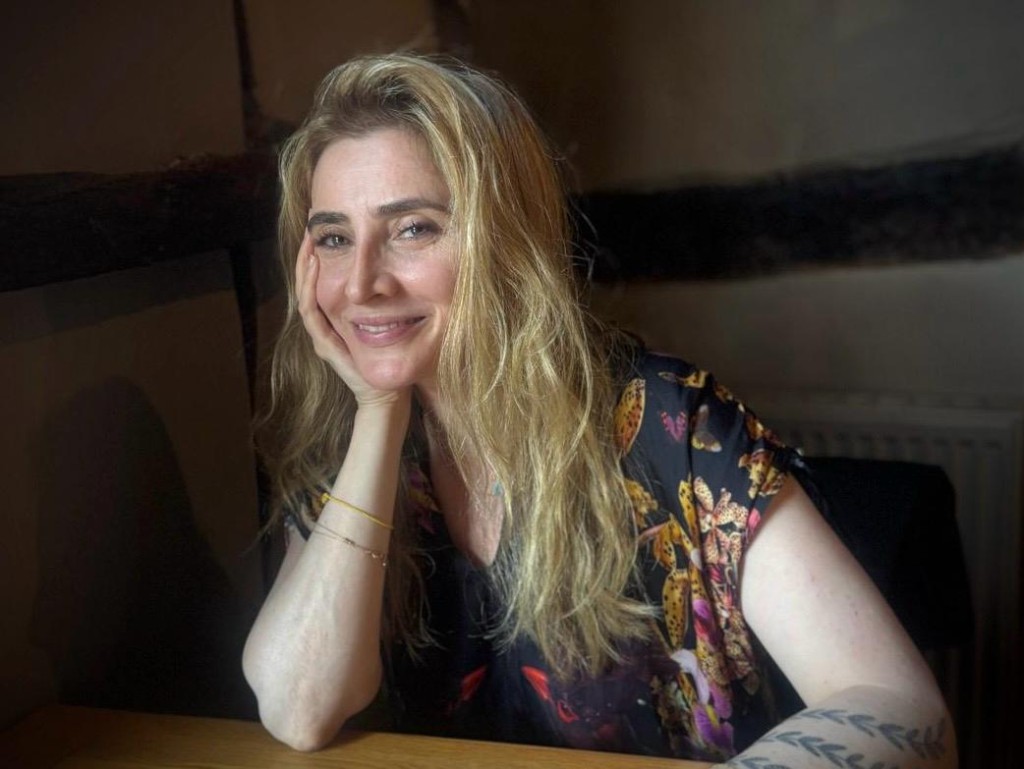
portrait by Emily Jo West
Born in Baltimore to Syrian-Armenian immigrants, raised in rural Indiana and Alabama, and shaped by summers in Aleppo, Sona grew up between places, languages, histories, and competing accounts of the world. Her work brings personal narrative, ancestral history, irreverent comedy, music, and contemplative inquiry into live encounter.
At Wake Forest University, she was mentored by Dr. Maya Angelou, whose example shaped her understanding of storytelling as an artistic, ethical, and spiritual practice. Sona spent the next two decades working as an actor in theater and film before turning toward the work she creates today.
In 2017, as Rudolf Arnheim Guest Artist Professor at Humboldt University in Berlin, she worked with refugee students while developing Hakawati and exploring storytelling as a communal and spiritual practice.
In February 2019, Sona returned to her family’s war-scarred home in Aleppo and rediscovered a trunk containing 180 hand-painted Karagöz shadow puppets belonging to her great-great-grandfather, Abkar Knadjian. Abkar carried the puppets from Urfa to Aleppo during the Armenian Genocide. The archive had survived a century of displacement and the Syrian war.
The discovery transformed the direction of Sona’s life and work. A first public telling at Harvard’s Center for Middle Eastern Studies grew into Azad Storytelling, while a 2023 Harvard ArtLab residency became the creative heart of AZAD (the rabbit and the wolf). The making of AZAD gave rise to the Scher/AZAD Method and to her next immersive work, Refuge(e), Illuminated.
Sona is the founder and creative director of Hakawati, a nonprofit established in the United States in 2018 and Armenia in 2024, and the founder of Modern Caravanserai. A practitioner of Vipassana meditation for more than a decade, she has sat extended silent retreats and studied with teachers including Sayadaw U Tejaniya and Jack Kornfield.
Across performance, writing, research, and participation, Sona is developing the Scher/AZAD Method—an artistic and contemplative framework rooted in West Asian storytelling and Vipassana. Through attention, paradox, humor, and shifting perspective, it explores how we might loosen the fixed stories created by trauma and expand what we are able to see.
Her work returns to one central inquiry: How can story help us notice where perception has narrowed—and make room for another understanding to emerge?
fellowships and residencies
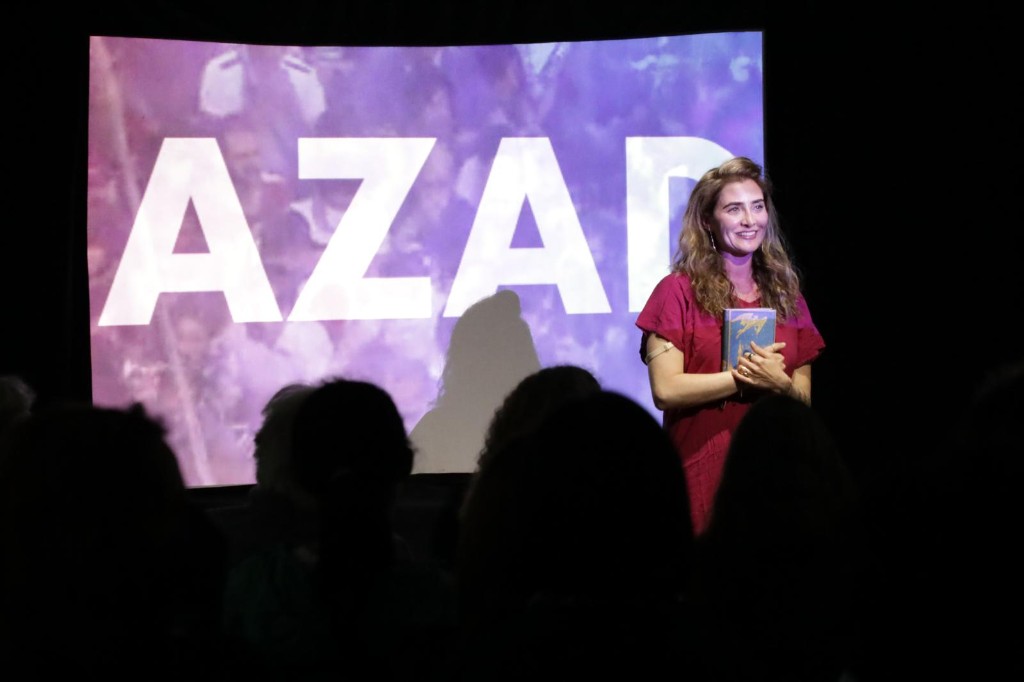
azad · harvard artlab · 2023